⭐ 68%
Tomatómetro
Fresh
👥 65%
Audiencia
1,212 votos
Dónde ver
Renta



Detalles
- Estado
- Released
- Duración
- 1h 39m
- Estreno
- 10 de octubre de 2014
- Presupuesto
- $11,000,000
- Taquilla
- $3,200,000
🎬 PelículaSuspenseAcciónDramaBélica2014⏱ 1h 39m
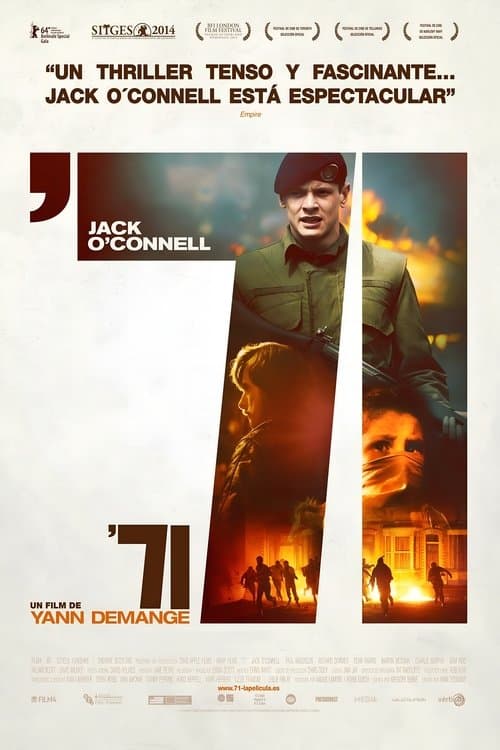
'71
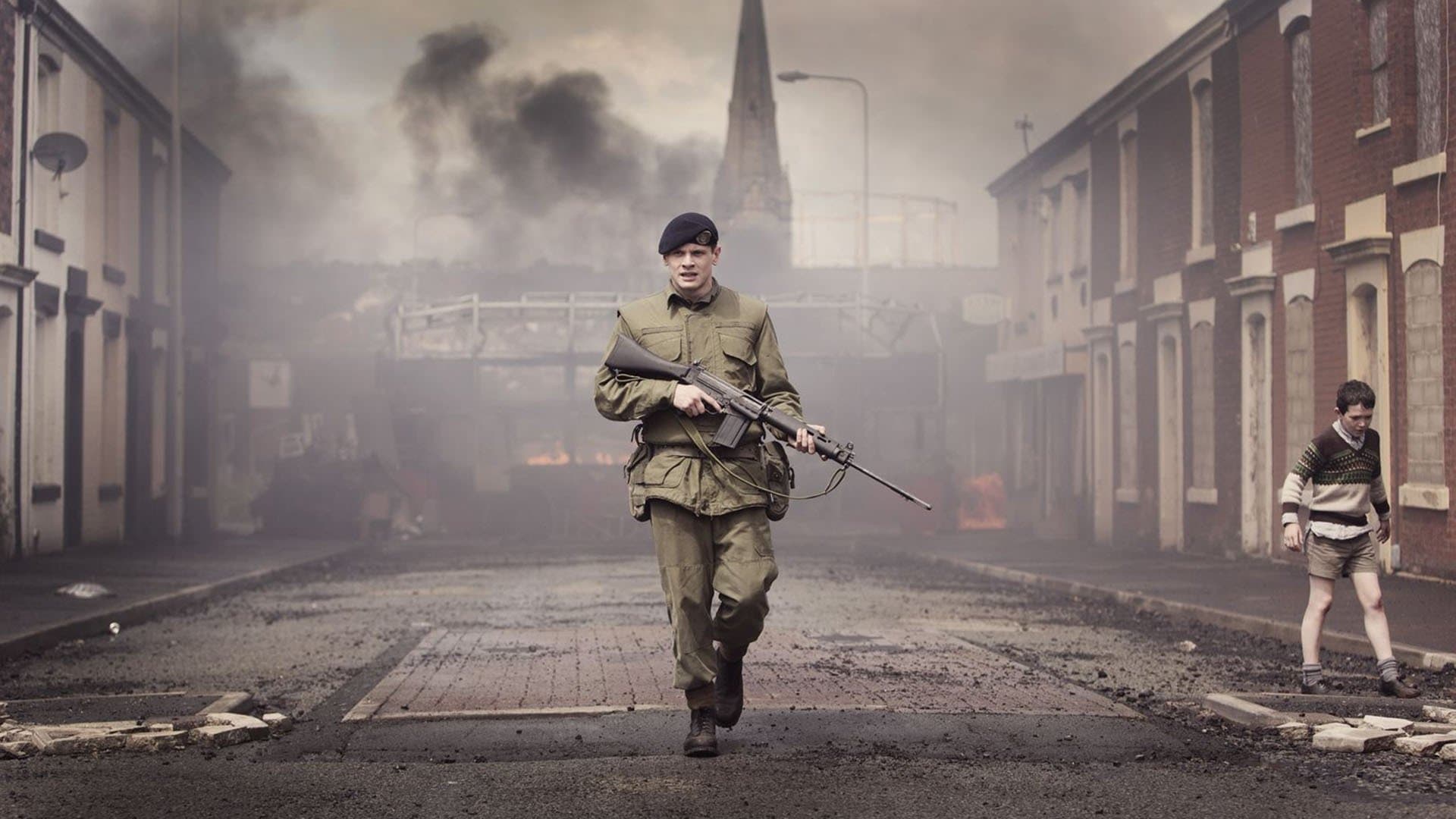
Corre el año 1971, y la tensión social en Irlanda del Norte está escalando hacia una situación casi de guerra civil. Tras un motín y un enfrentamiento muy violento entre vecinos de un barrio y el ejército, un joven soldado británico con poca experiencia, Gary, se extravía en las peligrosas calles de Belfast, donde el conflicto del IRA está en plena ebullición, y donde patrullan unidades paramilitares y bandas radicales callejeras.
Director
Yann DemangeGuión
Gregory Burke



📝 Reseñas de críticos
1 reseñas
Marco-Hugo Landeta Vacas
27 mar 2026
(CASTELLANO) '71 me ha parecido una película muy sólida y muy bien hecha, de esas que te meten dentro de una situación sin necesidad de explicártelo todo de forma pesada. Está muy lograda esa sensación de Belfast en los años setenta como un lugar roto, opresivo, lleno de tensión, donde cualquier calle, cualquier esquina y cualquier puerta pueden convertirse en una amenaza. La película transmite muy bien ese clima de guerra sucia y de miedo constante. Lo que más destaca es precisamente su realismo. No da la sensación de estar viendo una reconstrucción limpia o una película histórica demasiado ordenada, sino algo mucho más físico, más sucio y más inmediato. Estás metido en el caos, en la confusión y en la violencia de un conflicto donde no hay una línea clara que te permita respirar tranquilo. Y eso le da bastante fuerza, porque la historia se vive casi más con el cuerpo que con la cabeza. Además, funciona muy bien como thriller de supervivencia. La película sabe mantener la tensión, moverse con ritmo y hacer que el protagonista parezca siempre al borde del abismo. Pero lo bueno es que no se queda solo en la persecución o en el nervio. Poco a poco va dejando ver el contexto de fondo: los enfrentamientos entre las dos comunidades, la presencia británica en medio de todo y la sensación de que nadie controla realmente una situación que ya se ha podrido del todo. También me ha gustado que no intente simplificar demasiado un conflicto tan complejo. No convierte todo en un esquema fácil de buenos y malos, y eso se agradece. Hay violencia, hay odio, hay intereses cruzados y hay una humanidad muy dañada en todos los lados. La película no pretende dar una lección de historia completa, pero sí consigue que notes el peso humano del conflicto, que al final es lo más importante. Es verdad que en algún momento puede dar la sensación de que encadena demasiadas situaciones extremas o que fuerza un poco alguna coincidencia para mantener la odisea en marcha. Pero está tan bien dirigida, tan bien ambientada y tan bien sostenida en su tensión que eso no le resta demasiado. Al contrario, casi todo suma para que la experiencia sea intensa y muy absorbente. Al final, '71 deja la impresión de ser una película dura, nerviosa y muy inmersiva, que combina muy bien el thriller con el retrato de una ciudad y de una época marcadas por la violencia. No sé si profundiza del todo en todas sus implicaciones políticas, pero como experiencia cinematográfica funciona muy bien y consigue que sientas ese Belfast de los setenta como un auténtico infierno cotidiano. (ENGLISH) '71 struck me as a very solid and very well-made film, one of those movies that throws you into a situation without needing to explain everything in a heavy-handed way. That sense of Belfast in the 1970s as a broken, oppressive place, full of tension, where any street, any corner, and any doorway can become a threat, is extremely well done. The film captures that atmosphere of dirty war and constant fear very effectively. What stands out most is precisely its realism. It does not feel like a neat reconstruction or an overly tidy historical film, but something much more physical, grimy, and immediate. You are inside the chaos, the confusion, and the violence of a conflict where there is no clear line that allows you to feel safe. That gives the film a lot of force, because the story is experienced almost more through the body than through the mind. It also works very well as a survival thriller. The film knows how to sustain tension, keep moving with pace, and make the protagonist feel permanently on the edge. What is good, though, is that it does not settle for chase mechanics or pure suspense. Little by little, it reveals the background context: the clashes between the two communities, the British presence caught in the middle, and the feeling that nobody really controls a situation that has already rotted beyond repair. I also liked that it does not try to oversimplify such a complex conflict. It does not turn everything into an easy scheme of good and bad sides, and that matters. There is violence, hatred, conflicting interests, and deeply damaged humanity everywhere. The film does not try to offer a full history lesson, but it does make you feel the human weight of the conflict, which is what matters most in the end. It is true that now and then it can feel as if it piles up too many extreme situations or pushes a coincidence slightly too far in order to keep the ordeal going. But it is so well directed, so well staged, and so well sustained in its tension that this barely hurts it. If anything, almost everything adds up to make the experience intense and absorbing. In the end, '71 feels like a harsh, nervous, and very immersive film that combines thriller mechanics with the portrait of a city and a period scarred by violence. I am not sure it fully explores all of its political implications, but as a cinematic experience it works extremely well and makes that 1970s Belfast feel like a true everyday hell.